



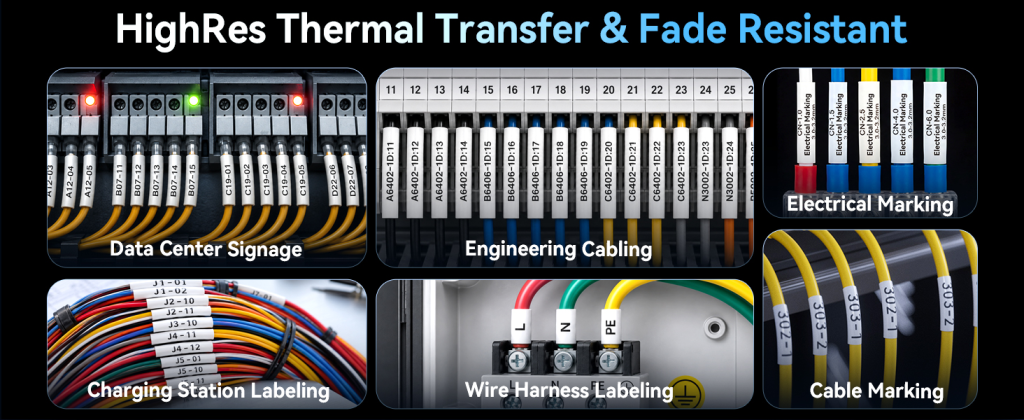
Telecom cable labeling is the highly structured administrative practice of applying permanent, standardized, and color-coded alphanumeric identifiers to fiber-optic patches, twisted-pair copper lines, coaxial feeds, and termination hardware across telecommunications infrastructure. Serving as the physical map for complex network topologies, this professional marking methodology enables telecom engineers and fiber technicians to trace data paths through distribution frames, patch panels, and outdoor consolidation points. Effective telecom labeling relies on durable, non-flagging materials designed to maintain complete legibility over decades of exposure to environmental fluctuations, UV radiation, and physical handling.
In an era dominated by high-speed data transmission and constant network expansion, a lack of structured identification is a critical risk factor. Modern telecommunication rooms must align strictly with the TIA-606-D standard, which dictates precise administrative classes for identifying everything from single rack spaces to multi-building backbone systems.
During massive hardware refreshes, technology migrations, or emergency network restoration, unlabelled or illegible fiber paths can cause catastrophic tracking errors, turning a simple maintenance window into hours of expensive, unplanned downtime. By establishing a machine-printed, high-contrast labeling strategy, enterprise network administrators can automate lifecycle asset tracking, simplify third-party compliance audits, and ensure that every fiber-optic bend radius remains stress-free and clearly mapped for future network expansion.
AIMO addresses the rigorous demands of enterprise telecommunications by deploying an interconnected suite of three professional printing platforms:
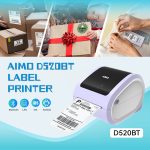
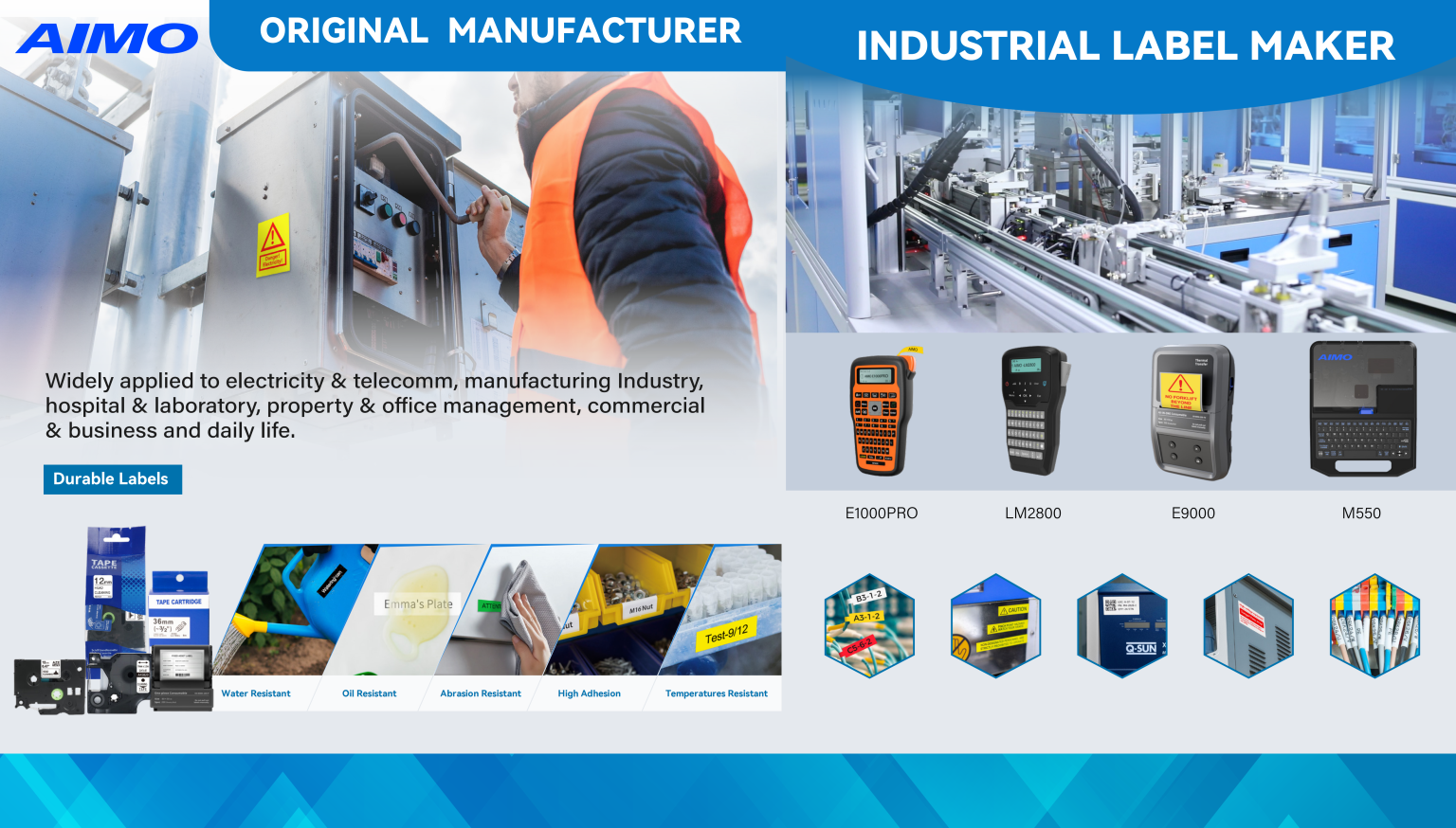
AIMO LM2800 (The Connected Infrastructure Hub): Specially engineered for high-density network environments. Seamlessly connecting via Bluetooth to our advanced mobile and PC design applications, the LM2800 allows field engineers to batch-import massive TIA-compliant naming directories straight from Excel or CSV files. Its high-contrast backlit LCD screen guarantees error-free data verification inside dark server vaults and overhead cable trays.
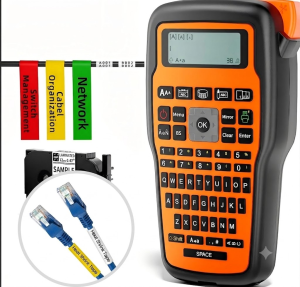
AIMO E1000 Pro (The Rugged Telecom Handheld): The perfect on-site tool for remote cell towers and outdoor cabinet terminations. Protected by a drop-tested, impact-resistant casing, this portable unit features specialized one-touch formatting hotkeys for instant cable flags and wraps. Its physical keyboard layout is available in English, Russian, and Arabic variations to support global field crews.
AIMO M550 (The High-Output Trunk Line Marker): For heavy power feeds, backbone conduits, and thick trunk lines entering telecom facilities, the M550 benchtop printer provides industrial-grade speed. Running at 40mm/s with an automated alloy cutter supporting clean full-cutting and half-cutting, it prints clear, permanent codes onto round PVC sleeves and polyolefin shrink tubes, using a smart motorized ribbon tensioning array to eliminate consumable waste.
Consumable Support: Flexible Nylon Cloth Tapes, Self-Laminating Vinyl, Cross-Linked Polyolefin Heat Shrink Tubing.
Print Resolution Availability: Up to 300 DPI for micro-sized alphanumeric text and 2D DataMatrix rendering.
Environmental Ratings: Consumables feature full UV stability, moisture barriers, and continuous resistance to grease and chemical cleaning solvents.
Q1: Why is flexible nylon cloth tape preferred over standard polyester tape for telecom patch cords? A: Standard polyester tape possesses structural memory, which causes it to unwrap or “flag” when applied tightly around small-diameter wires like CAT6 or fiber-optic jumpers. AIMO’s premium flexible nylon cloth tape is engineered with a supple, weave-like backing that easily contours to tight radii, entirely eliminating outward spring-tension and keeping labels locked flat over long lifecycles.
Q2: How do AIMO’s proprietary materials protect printed data on outdoor telecom infrastructure? A: Our industrial self-laminating vinyl labels feature a clear, chemical-resistant protective section that wraps entirely around the printed portion of the cable. This seals the high-resin thermal transfer ink under a durable clear barrier, shielding it from rain, extreme humidity, scratching, and intense sunlight inside outdoor junction boxes.
Q3: Can the AIMO printing fleet handle complex international serialization rules automatically? A: Yes. Both the standalone software firmware inside the E1000 Pro and M550, and our smartphone applications paired with the LM2800, include automated alpha-numeric serialization engines. This allows users to instantly generate complex, sequential telecom identification tags without manual data entry.
Q4: What production scale advantages does AIMO provide to wholesale B2B telecom buyers? A: AIMO operates from an expansive 65,000+ square meter automated smart manufacturing facility. With over 22% of our entire workforce dedicated to R&D, we maintain rigorous quality control standards and hold complete CE, FCC, RoHS, REACH, and SGS certifications. We back our hardware fleet with an official 1-year global warranty, offering excellent supply reliability and margin support for global B2B distributors.