



Why Field Electricians Are Switching to Battery-Powered Tube Printers for Cable ID
For decades, panel builders and industrial electricians relied on heavy, AC-powered tube printers anchored to a workshop desk. But as modern electrical projects shift toward fast-paced, on-site installations—from solar farms and remote high-voltage substations to unpowered commercial construction sites—the limitations of legacy cable marking tools have become a costly operational bottleneck.
Today, forward-thinking electrical contractors and field engineers are making a decisive operational shift: replacing legacy wired tube printers with high-capacity, lithium battery-powered cable identification systems.
In this guide, we explore why cordless tube printing is accelerating across the electrical engineering sector, how it solves critical job-site challenges, and what features to look for when choosing a portable wire marking machine.
1. The On-Site Power Bottleneck: Solving Grid Dependence in Control Panel Wiring
Ask any industrial electrician about their biggest job-site frustration, and “finding a working power outlet” will always top the list.
In new construction projects or remote substations, grid power is often unavailable during initial wiring stages. Technicians are typically forced to:
Drag heavy, hazardous extension cords across busy job sites.
Rely on noisy diesel generators that introduce voltage fluctuations.
Print cable tags hours or days in advance at the office—leaving zero flexibility for mid-installation circuit modifications or field edits.
The Cordless Advantage
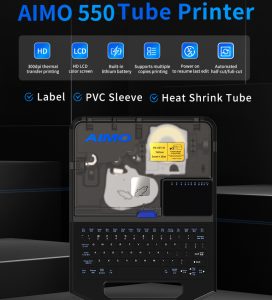
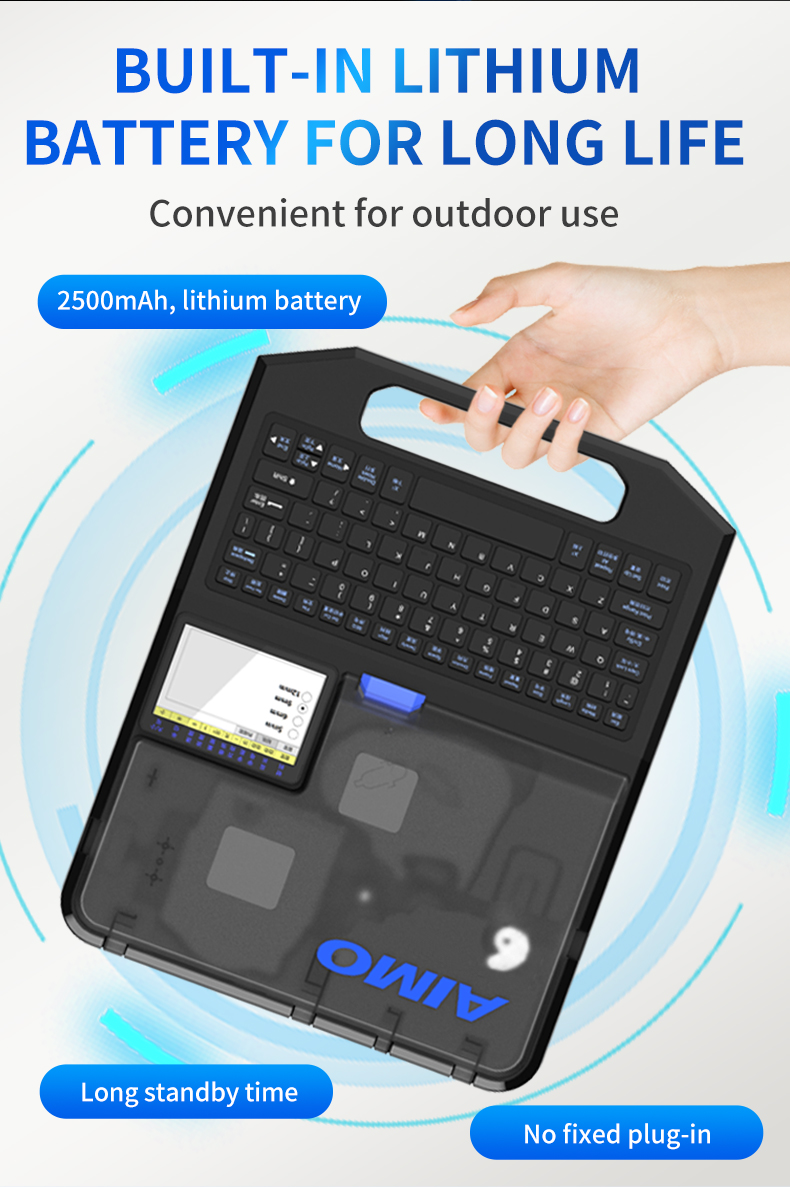
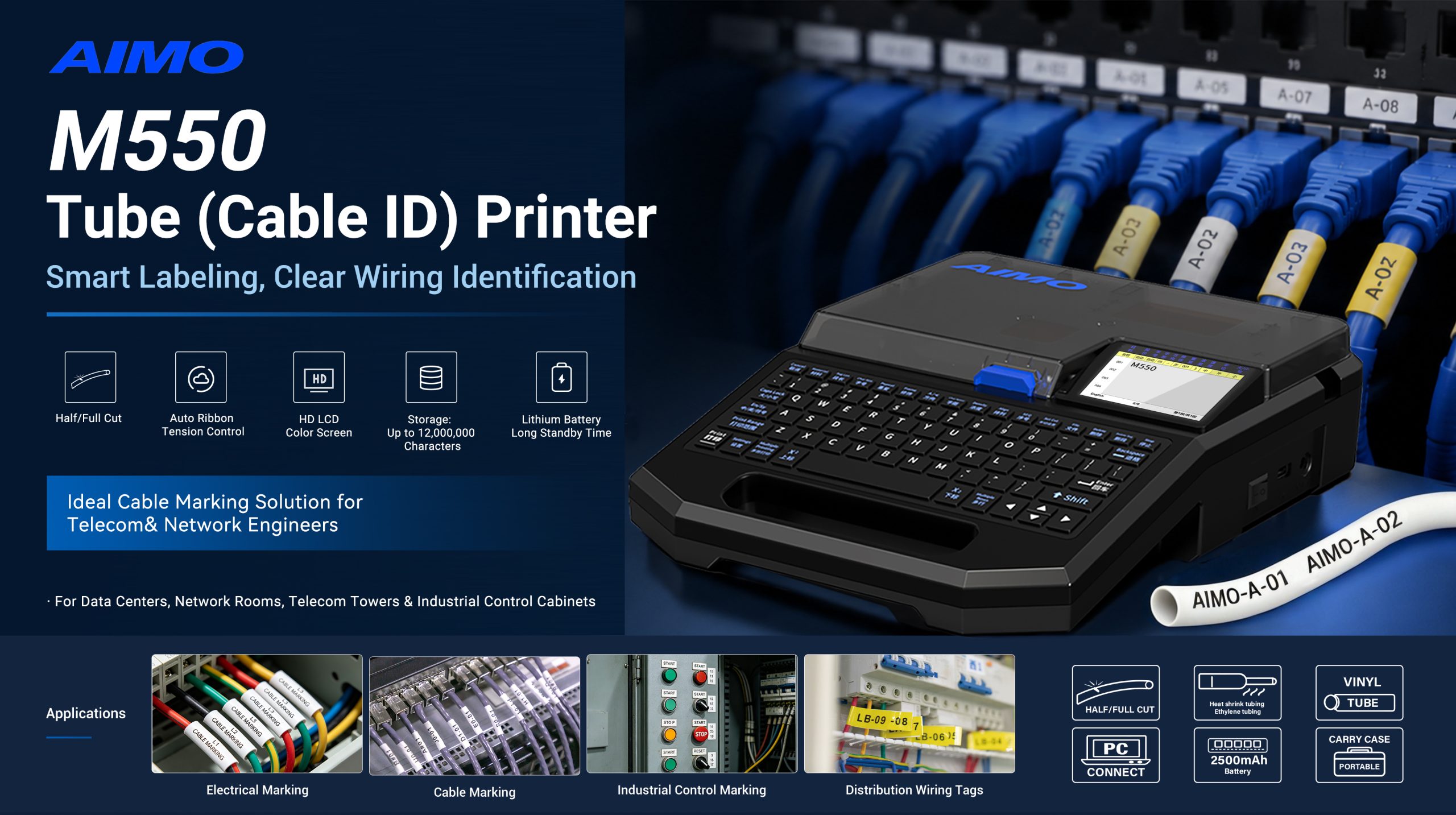
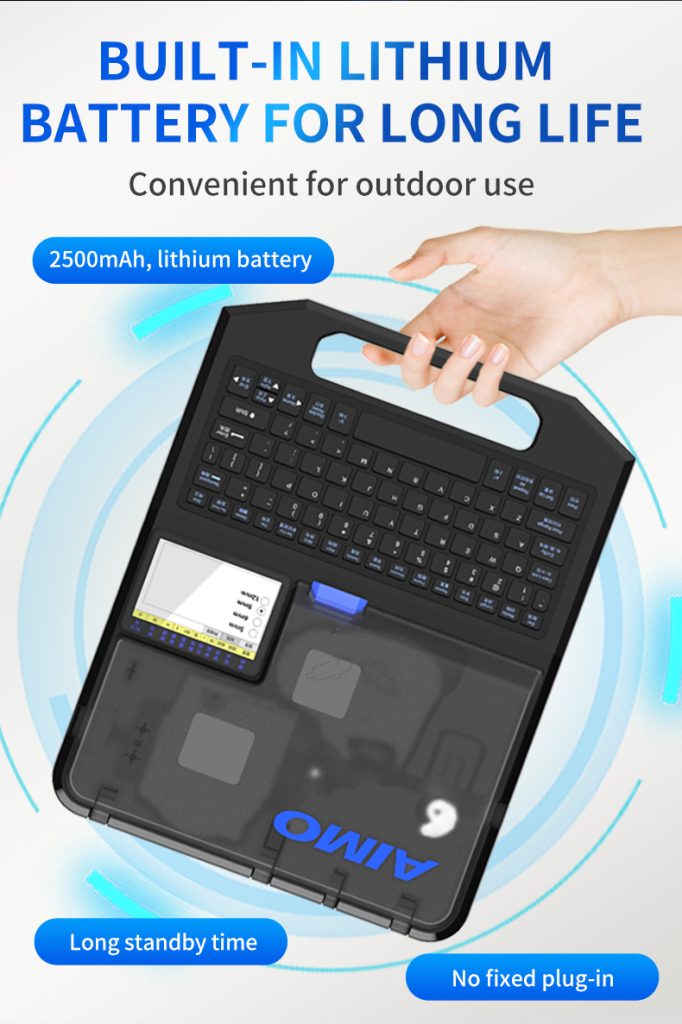
Modern portable cable ID printers equipped with rechargeable lithium-ion batteries (such as the 2,500mAh battery in the AIMO M550) eliminate grid dependence entirely. Electricians gain 100% mobility, allowing them to walk directly up to switchgears, junction boxes, or cable trays to format, edit, and print wire sleeves on demand.
2. Lithium-Ion vs. AA Batteries: Consistent Power for Industrial Thermal Transfer
Field technicians often ask: “Why not just use a standard label maker powered by AA alkaline batteries?”
While AA batteries are easy to source, they present severe flaws when powering precision thermal transfer mechanisms and heavy feed rollers:
Voltage Drops & Faded Text: As AA batteries deplete, their output voltage drops sharply. This results in inconsistent heat transfer, causing text on industrial cable wraps or heat-shrinkable tubing to become light, blurry, or unreadable—violating OSHA and ANSI safety legibility standards.
Short Operational Cycles: Printing dense, high-temperature heat-shrink labels drains AA batteries in under an hour, creating continuous waste and high battery replacement costs.
Feed Motor Jams: Thermal print heads and precision cutters require a steady current. Low battery voltage increases motor strain, causing media jams during long batch-printing runs.
The Lithium-Ion Upgrade
Industrial-grade rechargeable lithium batteries maintain a flat discharge voltage curve. This guarantees that the 1st sleeve printed at 8:00 AM matches the razor-sharp 300 DPI clarity of the 500th sleeve printed at 5:00 PM.
3. High-Speed Serialization Meets Auto Half-Cutting
Mobility alone is not enough—speed is critical when labeling complex PLC cabinets containing hundreds of terminal connections.
Advanced cordless ferrule printers deliver desktop-grade performance directly to the job site:
High-Speed Output (up to 40mm/s): Rapidly prints continuous sequences of PVC sleeves, heat-shrinkable tubes, and self-adhesive marker tapes.
Automatic Half-Cutting with Depth Adjustment: Produces continuous strips of partially cut sleeves that technicians can easily snap off one by one, keeping tags organized and preventing loose labels from dropping onto dusty floors.
Multi-Sequence Serialization: Automatically generates complex numerical and alphabetical cable sequences (e.g.,
A01–A99,L1–L3, or custom steps) with a single command, eliminating time-consuming manual typing.
Field Benchmark: In a control panel with 120 terminal wires, manually typing and cutting individual tags takes over 45 minutes. With lithium-powered auto-serialization and half-cutting, the entire batch is printed, cut, and organized in under 3 minutes.
4. On-Board Storage & Uninterrupted Memory Protection
Modern job-site wire marking machines are designed for unpredictable field conditions. High-performance portable tube printers feature:
USB-C Fast Charging: Easily recharge on the go via power banks, vehicle USB ports, or laptops.
Onboard File Storage & Auto-Save: Internal memory stores frequently used wire lists and template layouts. Even if the battery drains completely, your formatted cable data remains safely saved.
Feature Comparison: Traditional vs. Battery-Powered Tube Printers
| Feature Metric | Legacy Wired Tube Printer | AA Battery Label Maker | Battery-Powered Tube Printer (e.g., AIMO M550) |
| Field Mobility | Restricted to AC Outlets | Portable | 100% Cordless & Job-Site Ready |
| Print Clarity (300 DPI) | Constant (AC-powered) | 203 dpi | Consistently Sharp (Flat Discharge Curve) |
| Batch Printing Speed | Fast (30–40mm/s) | Slow & prone to stalling | High-Speed 40mm/s Output |
| Power Source Cost | Downtime setup costs | High recurring battery costs | Zero Waste (Rechargeable Lithium) |
| Compatible Media | PVC Sleeves, Heat Shrink, Tapes | Light tapes only | PVC Sleeves, Heat Shrink Tubes, Labels |
❓ Frequently Asked Questions (FAQ)
Q1: Can I use a tube printer without an AC power outlet on job sites?
Yes. Modern cordless tube printers powered by high-capacity rechargeable lithium batteries allow electricians to format, edit, and print PVC sleeves, heat-shrinkable tubes, and label tapes directly at the control panel without plugging into an AC outlet.
Q2: What is the best cable ID printer for field electricians?
The best cable ID printer for field work should offer a rechargeable lithium-ion battery, high-resolution 300 DPI thermal transfer printing, automatic half-cutting, sequence serialization, and broad media compatibility (including PVC sleeves and heat-shrink tubes).
Q3: How long does a lithium battery last in a portable tube printer?
A high-capacity lithium battery (such as 2,500mAh) typically provides enough power for a full 8-hour shift, supporting thousands of continuous cuts and prints on a single charge.